

How Pinkerton Liability Works in Federal Drug Conspiracy Cases
Pinkerton liability is a federal legal doctrine that holds every member of a conspiracy criminally responsible for all crimes committed by any co-conspirator, even if they did not personally commit, participate in, or know about those crimes.
In federal drug conspiracy cases, this means you can face conviction and sentencing for drug quantities you never touched, transactions you never witnessed, and violent acts committed by people you may have barely known.
The only requirement is that the crime was reasonably foreseeable as a consequence of the conspiracy you joined.
This rule makes federal drug conspiracy charges among the most dangerous in the criminal justice system because your exposure is not limited to your own conduct.
Understanding how Pinkerton liability works is essential for anyone facing federal drug conspiracy charges or under investigation by federal agencies.
What Is the Pinkerton Doctrine and Where Did It Come From?
The Pinkerton doctrine comes from a 1946 United States Supreme Court case called Pinkerton v. United States.
Walter and Daniel Pinkerton were brothers who conspired to evade taxes on illegal whiskey.
Daniel was convicted of substantive tax violations even though the evidence showed Walter alone committed those specific acts.
Daniel argued he could not be guilty of crimes he did not personally commit.
The Supreme Court disagreed and established a rule that continues to affect federal defendants today.
The Court held that during the duration of a conspiracy, overt acts by any conspirator are attributed to all other conspirators.
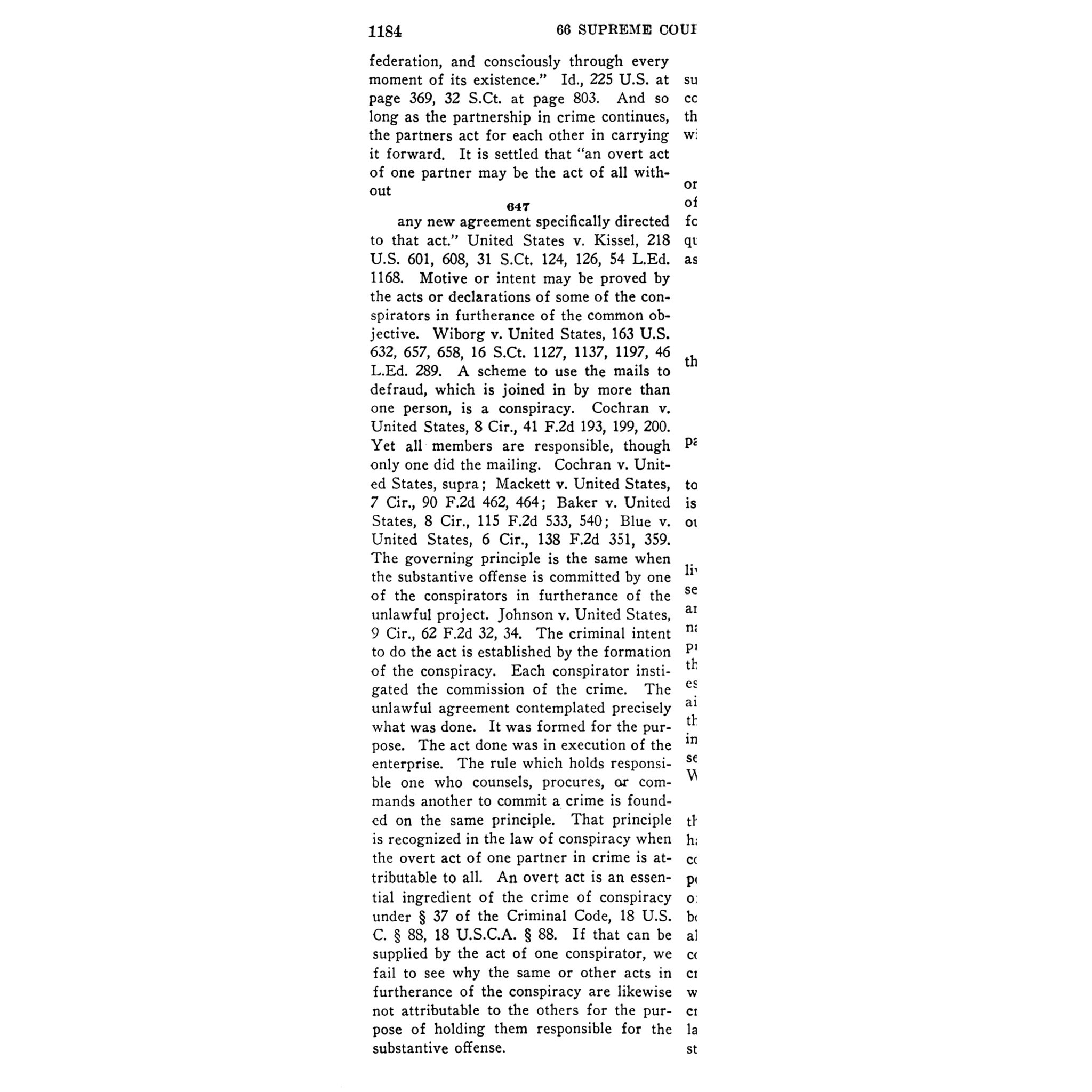
According to the Department of Justice Criminal Resource Manual, so long as the partnership in crime continues, the partners act for each other in carrying it forward.
An overt act of one partner becomes the act of all without any new agreement.
What makes this case remarkable is that Daniel Pinkerton was in prison when some of the substantive offenses occurred.
The conspiracy followed him through the cell door.
The Court upheld his conviction because he had not formally withdrawn from the conspiracy.
This ruling created vicarious criminal liability as broad as the civil liability of a business partner for acts done by a co-partner in the course of the firm’s business.
How Does Pinkerton Liability Apply to Federal Drug Conspiracy Cases?
Pinkerton liability applies with particular force in federal drug conspiracy prosecutions under 21 U.S.C. Section 846.
According to the Legal Information Institute at Cornell Law School, a defendant can be held vicariously liable for a substantive offense committed by another member of a conspiracy if four conditions are met.
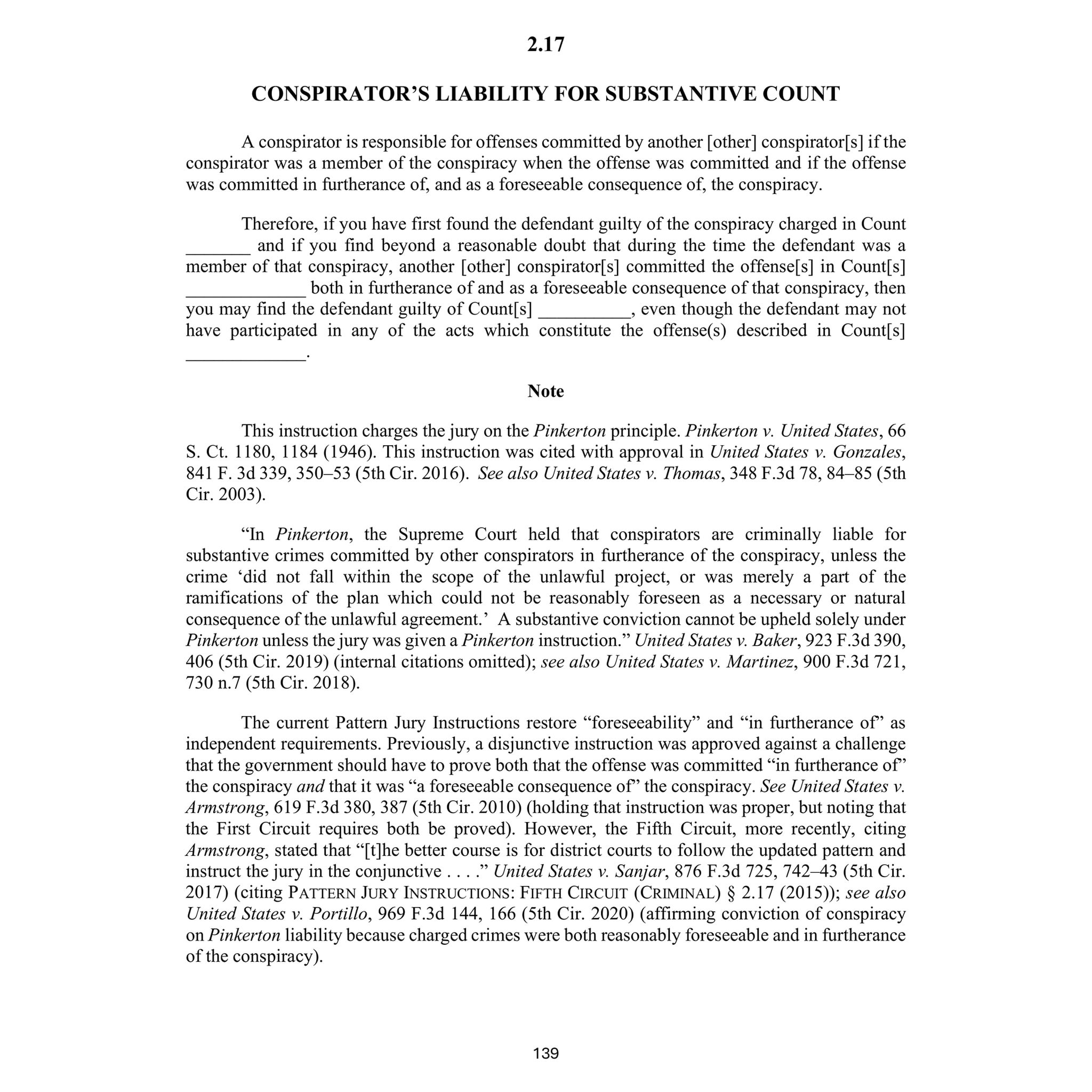
First, the defendant was a party to the conspiracy.
Second, the offense was within the scope of the unlawful project.
Third, the offense was committed in furtherance of the conspiracy.
Fourth, the defendant could have reasonably foreseen the offense as a necessary or natural consequence of the unlawful agreement.
In drug conspiracies, federal courts interpret “reasonably foreseeable” very broadly.
If you joined a drug distribution operation, violence is considered foreseeable because the drug trade involves disputes over territory, money, and product.
Additional drug transactions beyond what you personally knew about are considered foreseeable because expanding distribution is a natural goal of any drug operation.
Weapons possession is considered foreseeable because drug dealers often protect themselves and their product.
This broad interpretation means that a person who joined a conspiracy in a minor capacity can be held responsible for murders, assaults, robberies, and massive drug quantities they never knew existed.
What Are the Consequences of Pinkerton Liability in Sentencing?
The consequences of Pinkerton liability extend far beyond the question of guilt.
Under federal sentencing guidelines, your sentence is calculated based on the total drug quantity of the entire conspiracy during your period of involvement.
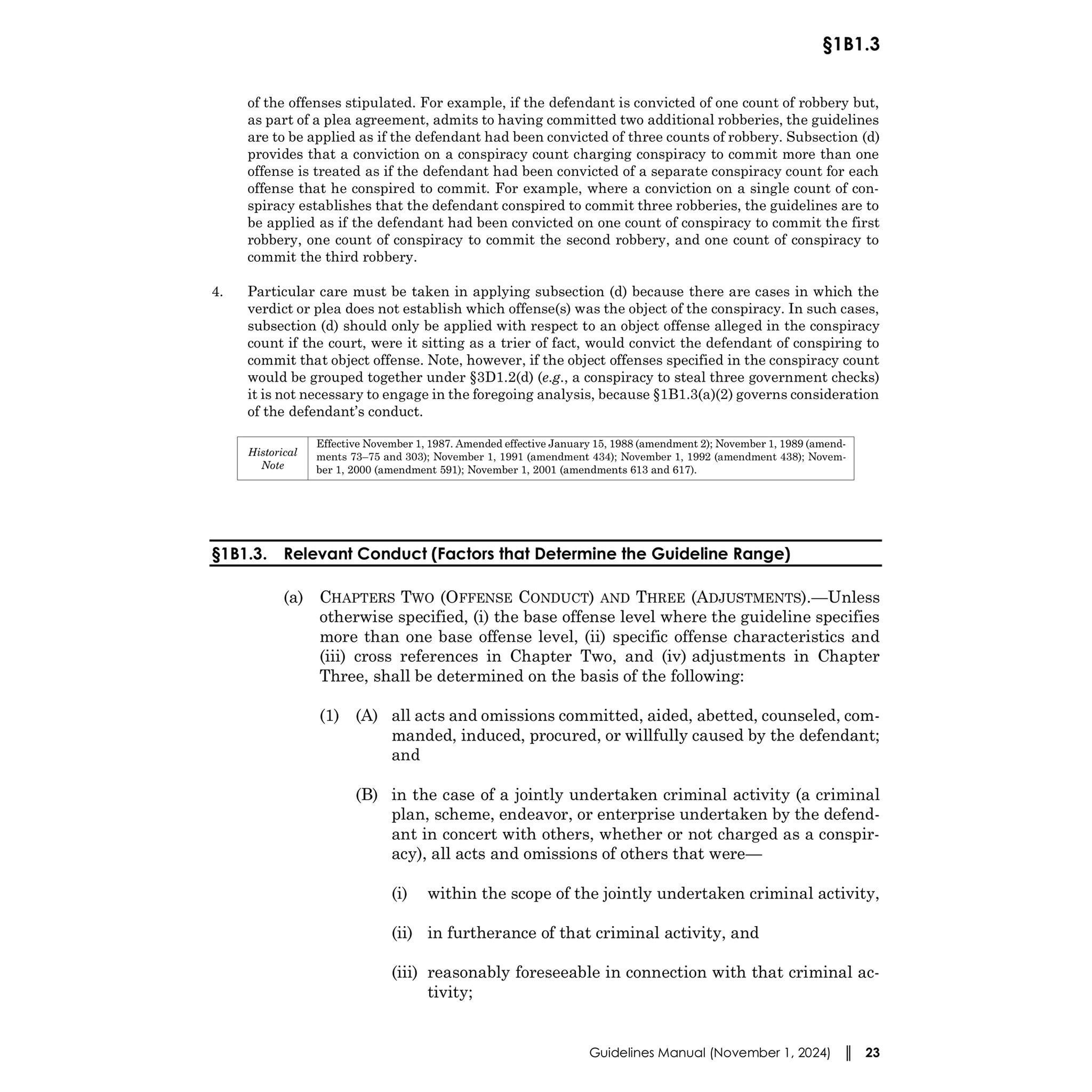
You are not sentenced based on what you personally handled.
You are sentenced based on what the operation moved while you were a member.
Federal drug crimes carry mandatory minimum sentences that judges cannot reduce below statutory floors.
A first offense involving five kilograms of cocaine triggers a ten-year mandatory minimum.
One kilogram of heroin carries the same ten-year floor.
If someone died from drugs connected to the conspiracy, the mandatory minimum jumps to twenty years.
Beyond drug quantity, Pinkerton liability affects sentencing enhancements.
If any co-conspirator possessed a firearm in connection with the conspiracy, you can receive a two-level enhancement under the sentencing guidelines even if you never saw the weapon.
If violence occurred, the relevant conduct calculations can increase your offense level substantially.
The practical effect is that someone who joined a conspiracy in a minor role can face decades in federal prison based on conduct by people they barely knew.
What Must the Government Prove to Apply Pinkerton Liability?
Federal prosecutors seeking to apply Pinkerton liability must prove specific elements to hold you responsible for a co-conspirator’s crimes.
The government must first establish that a conspiracy existed.
This requires proof of an agreement between two or more people to violate federal drug laws.
The agreement does not need to be written or even spoken explicitly.
Courts allow prosecutors to prove agreement through circumstantial evidence such as coordinated conduct.
The government must then prove that you knowingly joined the conspiracy.
This means showing you knew the purpose of the agreement and voluntarily participated.
Mere presence or association is not enough, but federal prosecutors can use evidence like phone records, text messages, and cooperating witness testimony to establish knowing participation.
Finally, the government must prove that the substantive crime committed by your co-conspirator was reasonably foreseeable.
This is where defense challenges often focus because the scope of foreseeability determines how far your liability extends.
Courts have set limits on Pinkerton liability when substantive offenses were clearly outside the scope of the conspiracy or could not have been anticipated as a natural consequence.
However, those limits rarely help defendants in drug conspiracy cases because federal courts generally presume that violence, additional drug transactions, and weapons are foreseeable in the drug trade.
What Are the Limits on Pinkerton Liability?
The Supreme Court in Pinkerton recognized some limitations on this vicarious liability.
According to the opinion, a different result would arise if the substantive offense committed by a co-conspirator was not done in furtherance of the conspiracy.
Crimes that do not fall within the scope of the unlawful project or that are merely ramifications of the plan that could not be reasonably foreseen should not attach to other conspirators.
In practice, these limitations create potential defense arguments.
If a co-conspirator committed a crime for purely personal reasons unrelated to the drug operation, that crime may fall outside the conspiracy’s scope.
If the criminal conduct was so bizarre or unpredictable that no reasonable person could have anticipated it, the foreseeability element may fail.
If the crime occurred after you withdrew from the conspiracy, Pinkerton liability should not apply to that offense.
Withdrawal is a critical concept but notoriously difficult to establish.
Courts require affirmative action to defeat the purposes of the conspiracy or communication of withdrawal to co-conspirators.
Simply stopping your participation is not enough.
You must take steps that demonstrate your intent to abandon the criminal enterprise.
Even successful withdrawal only protects you from crimes committed after you withdrew.
You remain liable for conspiracy itself and for all substantive offenses that occurred while you were a member.
How Do Defense Attorneys Challenge Pinkerton Liability?
Experienced federal criminal defense attorneys use several strategies to challenge Pinkerton liability in drug conspiracy cases.
The first approach attacks the conspiracy itself.
If the government cannot prove an agreement existed or cannot prove you knowingly joined it, Pinkerton liability cannot attach because there is no underlying conspiracy connecting you to co-conspirators’ conduct.
Defense attorneys examine the evidence of agreement carefully, looking for proof that conduct was merely parallel rather than coordinated.
The second approach challenges the scope of the conspiracy.
Large drug investigations often involve multiple separate conspiracies that prosecutors try to charge as a single conspiracy.
Demonstrating that you were part of a smaller operation unconnected to other defendants can limit your exposure to drug quantities and crimes outside your actual involvement.
The third approach targets foreseeability.
Defense counsel can argue that specific crimes fell outside what any reasonable person would anticipate from the conspiracy you joined.
This is particularly relevant for violent crimes that may have stemmed from personal disputes rather than drug business.
The fourth approach involves withdrawal.
If you took affirmative steps to abandon the conspiracy before certain crimes occurred, defense attorneys can present evidence of that withdrawal to limit your liability.
The fifth approach focuses on sentencing mitigation even when liability cannot be avoided.
Minor role reductions, safety valve provisions, and cooperation agreements can significantly reduce sentences for defendants who played limited roles in the conspiracy.
What Should You Do If You Are Facing Federal Drug Conspiracy Charges?
If you are under investigation or facing charges for federal drug conspiracy, understanding Pinkerton liability is critical to making informed decisions about your defense.
The first step is to exercise your right to remain silent.
Anything you say to federal agents can establish your knowledge of the conspiracy, your agreement to participate, and the scope of activity you knew about.
Each statement expands the potential reach of Pinkerton liability.
The second step is to retain an experienced federal criminal defense attorney immediately.
Federal drug conspiracies are among the most complex and serious charges in the federal system.
You need an attorney who understands how federal prosecutors build these cases and how to challenge the evidence linking you to co-conspirators’ conduct.
The third step is to work with your attorney to analyze the scope of your actual involvement versus the scope the government is trying to attribute to you.
Early investigation can identify evidence that limits your role, establishes withdrawal, or demonstrates that certain conduct was not foreseeable.
The fourth step is to evaluate all options including trial defense, plea negotiation, and cooperation.
Pinkerton liability creates enormous pressure on defendants because the exposure is so high.
An experienced attorney can help you understand the realistic options and outcomes for your specific situation.
Need Help Defending Against Federal Drug Conspiracy Charges?
Pinkerton liability makes federal drug conspiracy charges exceptionally dangerous because your fate is tied to the conduct of everyone in the conspiracy, including people you may have barely known.
The potential for decades in federal prison based on crimes you did not commit demands aggressive, experienced legal defense.
As a federal drug conspiracy attorney in Dallas, Michael Lowe has defended clients facing serious federal drug conspiracy charges throughout Texas.
With over 150 jury trials and experience as a former prosecutor, he understands how federal cases are built and how to challenge the evidence against you.
Contact Michael Lowe today by calling (214) 526-1900 for a free consultation to discuss your federal drug case.
Frequently Asked Questions
What is Pinkerton liability in federal drug conspiracy cases?
Pinkerton liability is a legal doctrine from the 1946 Supreme Court case Pinkerton v. United States that holds conspiracy members criminally responsible for all foreseeable crimes committed by co-conspirators in furtherance of the conspiracy. In federal drug cases, this means you can be convicted and sentenced for drug quantities, transactions, and violent acts committed by others while you were part of the conspiracy, even without your knowledge or direct participation.
Can I be convicted of murder under Pinkerton liability if a co-conspirator killed someone?
Yes, you can be convicted of murder under Pinkerton liability if a co-conspirator killed someone during the drug conspiracy, provided the killing was reasonably foreseeable and committed in furtherance of the conspiracy. Federal courts generally consider violence foreseeable in drug operations because disputes over territory, money, and product commonly lead to violent confrontations between drug traffickers and others.
How can I avoid Pinkerton liability for crimes my co-conspirators committed?
Avoiding Pinkerton liability requires either proving you never joined the conspiracy, proving you formally withdrew before the crimes occurred, or proving the crimes were not foreseeable consequences of the conspiracy. Withdrawal requires affirmative action such as communicating your departure to co-conspirators or taking steps to defeat the conspiracy’s purpose. Simply stopping participation without clear withdrawal does not end your liability.
Does Pinkerton liability affect my federal sentencing guidelines calculation?
Yes, Pinkerton liability significantly affects sentencing calculations because relevant conduct under federal sentencing guidelines includes all reasonably foreseeable acts committed by co-conspirators in furtherance of the conspiracy. This means drug quantities you never handled, weapons others possessed, and enhancements for violence can all increase your offense level and sentencing range based on co-conspirator conduct.
What defenses work against Pinkerton liability in federal drug cases?
Effective defenses against Pinkerton liability include challenging whether an agreement existed, disputing that you knowingly joined the conspiracy, proving withdrawal before certain crimes occurred, arguing that specific crimes were not reasonably foreseeable, and demonstrating that the charged conduct fell outside the scope of the conspiracy. An experienced federal defense attorney can identify which defense strategies apply to your specific circumstances.
Is Pinkerton liability the same as aiding and abetting?
No, Pinkerton liability and aiding and abetting are distinct legal theories with different requirements. Aiding and abetting requires proof that you consciously shared in a criminal act by assisting another person. Pinkerton liability requires only proof that you were part of a conspiracy and that crimes were foreseeable. You can be convicted under Pinkerton without any direct assistance in the substantive crime, making it broader in some respects than aiding and abetting.
Comments are welcomed here and I will respond to you -- but please, no requests for personal legal advice here and nothing that's promoting your business or product. Comments are moderated and these will not be published.

Leave a Reply