

The Buyer-Seller Exception: When Buying Drugs Is Not a Conspiracy
Simply buying drugs from someone does not automatically make you a co-conspirator in a drug distribution ring.
Under both federal and Texas law, a buyer-seller relationship, standing alone, is not enough to prove a conspiracy.
Yet prosecutors routinely try to charge drug buyers as full conspirators, exposing them to the same severe penalties as the people running the operation.
Understanding the buyer-seller exception and how it works in court is critical for anyone facing these charges in Dallas or anywhere in Texas.
This distinction between a customer and a co-conspirator can mean the difference between a simple possession charge and decades in federal prison.
The law recognizes that when you buy something, even something illegal, you are not automatically working with the seller toward a shared criminal goal.
But federal prosecutors are aggressive, and they know that conspiracy charges carry enormous sentencing power.
Knowing your rights under this legal doctrine could change the entire outcome of your case.
Why Does the Buyer-Seller Exception Exist in Drug Conspiracy Law?
The buyer-seller exception is a legal defense recognized by federal courts that prevents prosecutors from turning every drug purchase into a conspiracy charge.
Under 21 U.S.C. § 846, the federal drug conspiracy statute, anyone who agrees to violate federal drug laws faces the same penalties as if they committed the underlying offense.
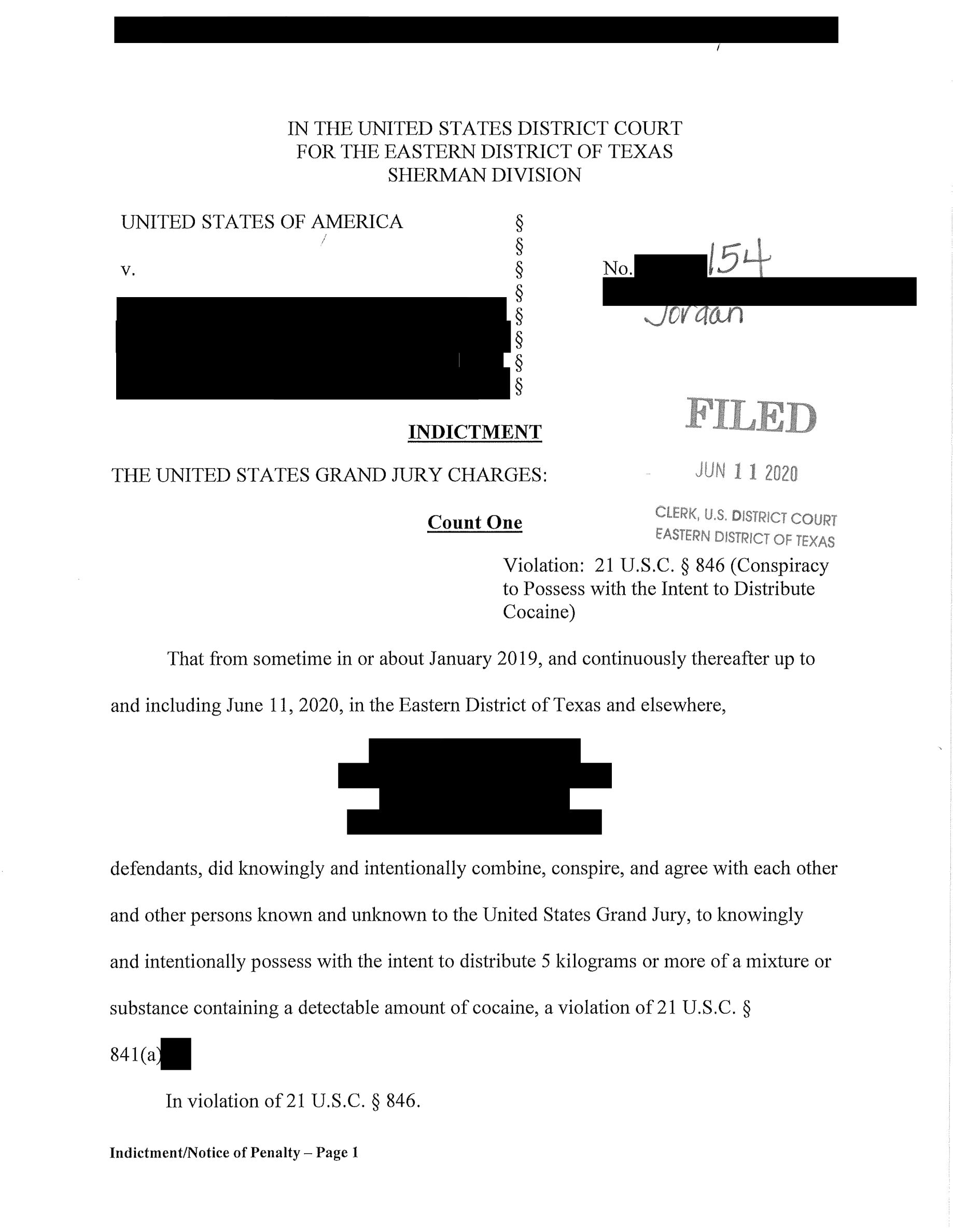
But courts have consistently held that a simple purchase does not equal an agreement to join a drug distribution operation.
Every drug deal involves an unlawful agreement to exchange drugs, but that basic transaction is not the kind of agreement that rises to the level of conspiracy.
The Fifth Circuit Court of Appeals, which covers all federal cases in Texas, has been clear on this point.
In United States v. Maseratti, 1 F.3d 330 (5th Cir. 1993), the court ruled that a buyer-seller relationship, without more, will not prove a conspiracy.
The reasoning is straightforward: when you buy drugs, your goal is to acquire them.
When a seller sells drugs, their goal is to make money.
These are two separate purposes, not a shared criminal objective.
The Fifth Circuit reinforced this principle in United States v. Delgado, 672 F.3d 320 (5th Cir. 2012), an en banc decision where the full court explained that this rule exists to shield people who are simply purchasing drugs from the harsher penalties meant for distributors.
Without this protection, every person who ever bought drugs from a dealer could theoretically be charged as a co-conspirator in that dealer’s entire operation, facing mandatory minimum sentences of 10 years to life in federal prison.
This en banc ruling is particularly important for defendants in Texas because it represents the binding precedent that every federal trial court in the state must follow.
Why Does This Distinction Matter for Sentencing?
The difference between a drug possession charge and a drug conspiracy charge can result in decades of additional prison time.
In a federal conspiracy case, your sentence is not based on what you personally did.
It is based on the total drug quantity of the entire conspiracy during the time you were allegedly involved.
This means a buyer who purchased small amounts could be held responsible for every gram the entire organization distributed.
Federal drug conspiracy convictions under 21 U.S.C. § 846 carry the same penalties as the underlying drug offense.
For cocaine, that could mean a 10-year mandatory minimum for quantities of 5 kilograms or more.
For methamphetamine, the mandatory minimum kicks in at 50 grams.
A person who only bought a few grams for personal use could face sentencing based on the full weight of the conspiracy’s drug operation if prosecutors successfully lump them in as a co-conspirator.
On top of that, the Pinkerton doctrine allows the government to hold every member of a conspiracy responsible for any foreseeable criminal act committed by any other member.
That includes acts of violence, weapons charges, and additional drug transactions that the buyer had nothing to do with.
This is why the buyer-seller exception is not just a legal technicality.
It is a lifeline for people who were nothing more than customers.
How Do Prosecutors Try to Turn Buyers into Conspirators?
Federal prosecutors know that conspiracy charges give them enormous leverage over defendants.
A conspiracy charge lets them sweep in people on the fringes of a drug operation and hold them accountable for the full scope of the criminal enterprise.
When prosecutors build a case against a drug distribution network, they often target buyers as a way to add defendants and strengthen their case.
Charging a buyer as a conspirator also gives the government a powerful bargaining chip in plea negotiations, since the buyer now faces vastly more prison time than a simple possession charge would carry.
One common tactic is pointing to repeated purchases.
If you bought drugs from the same person multiple times, prosecutors will argue that this pattern shows you had an ongoing agreement to participate in the drug trade.
They will present phone records, text messages, and surveillance footage to paint a picture of you as more than just a customer.
But as the Fifth Circuit noted in United States v. Galvan, 693 F.2d 417 (5th Cir. 1982), it is not enough for the evidence merely to establish a general sense of criminal activity.
The government needs proof of an actual agreement, not just proof that drugs changed hands.
What Evidence Do Prosecutors Use to Upgrade Buyers to Conspirators?
Prosecutors look for specific factors that go beyond a simple purchase, and courts have identified several types of evidence that can push a buyer-seller relationship into conspiracy territory.
These include whether the buyer received drugs on credit or consignment, whether the buyer had a financial stake in the resale of the drugs, whether there was an understanding that the drugs would be resold, and whether the buyer played any role in helping the seller’s distribution operation.
Each of these factors, standing alone, may not be enough, but the more factors present, the harder it becomes to maintain the buyer-seller defense.
For example, if a buyer receives drugs without paying upfront and promises to pay after reselling them, that looks much more like a business partnership than a customer transaction.
The Fifth Circuit has recognized that receiving drugs without payment is strong evidence of a conspiracy because it shows a level of trust and mutual dependence that goes beyond what you would see between a regular buyer and seller.
Similarly, if a buyer helps the seller find new customers, provides information about law enforcement activity, or plays any role in the distribution chain, prosecutors will use that conduct to argue the relationship crossed the line from purchase to partnership.
Another common piece of evidence prosecutors rely on is the quantity of drugs involved.
If someone is purchasing amounts far beyond what would be needed for personal use, the government will argue that the buyer intended to resell the drugs and was therefore participating in the distribution scheme.
However, courts have held that large-quantity purchases alone do not automatically create a conspiracy, particularly when there is no other evidence of a shared objective.
The government still needs to prove an agreement that goes beyond the basic transaction itself.
What Factors Do Courts Examine When Applying the Buyer-Seller Exception?
Federal courts consider the totality of the circumstances when deciding whether a relationship was a buyer-seller transaction or a conspiracy.
No single factor is decisive on its own, and the analysis requires looking at the full picture of the relationship between the parties.
Understanding these factors is essential for building a defense, because each one can either support or undermine the argument that the relationship was strictly commercial.
The factors come from jury instructions that have been developed over decades of federal case law.
The first factor is whether the transactions involved large quantities of drugs.
While large amounts can suggest distribution intent, this alone does not prove conspiracy.
A person could be buying in bulk for personal use or even for resale without being part of the seller’s broader operation.
The question is whether the quantity, combined with other evidence, suggests a joint criminal objective rather than an independent purchasing decision.
The second factor is whether the parties had a standardized way of doing business over time.
If a buyer and seller developed routines, codes, or established protocols for their transactions, courts may view this as evidence of an ongoing arrangement that goes beyond casual purchases.
However, repeat transactions alone are not enough.
The Seventh Circuit addressed this directly in United States v. Goliday, 41 F.4th 778 (7th Cir. 2022), where the court held that a pattern of repeated transactions on a scale suggesting resale does not, by itself, constitute conspiracy.
Does Buying Drugs on Credit Make You a Conspirator?
Buying drugs on credit is one of the strongest factors prosecutors use to argue that a buyer-seller relationship crossed into conspiracy territory, but it does not automatically make you a conspirator.
When a seller extends credit to a buyer, it suggests a level of trust and investment in the buyer’s success that goes beyond a typical arm’s-length transaction.
The seller is essentially betting that the buyer will resell the drugs and pay them back, which implies a shared financial interest in the distribution.
Courts view this factor seriously because it signals that the parties have a stake in each other’s operations.
However, credit alone does not automatically establish a conspiracy.
It is one piece of evidence that courts weigh alongside everything else.
A defense attorney can argue that credit was extended for other reasons, such as a personal relationship, or that the buyer simply owed money from a previous transaction and was not actually participating in the distribution scheme.
The defense can also present evidence that the buyer paid for drugs with their own money on most occasions, limiting the significance of any credit arrangement.
The key distinction courts draw is between a buyer who happens to resell what they purchase and a buyer who has an actual agreement with the seller to participate in the seller’s distribution operation.
The Second Circuit illustrated this point in United States v. Dickerson, where the court compared a drug buyer to a food truck that purchases supplies from a grocery store.
Just because the food truck resells products it bought does not make it part of the grocery store’s business.
This analogy highlights the fundamental principle that downstream resale by a buyer does not transform a commercial relationship into a criminal partnership.
How Does the Buyer-Seller Exception Work in Texas State Cases?
In Texas state court, drug conspiracy charges typically fall under Texas Penal Code § 71.02, which covers engaging in organized criminal activity.
This statute requires the prosecution to prove that the defendant acted with the intent to establish, maintain, or participate in a “combination” of three or more people who collaborate in criminal activities.
Texas law does not use the same buyer-seller exception terminology as federal courts, but the underlying principle is similar.
A person who simply buys drugs from a group does not automatically become a member of that group’s criminal organization.
Under Texas law, a combination requires collaboration, not just a customer relationship.
The prosecution must show that the buyer intended to participate in the combination’s ongoing criminal activities, not just complete a single transaction.
This is a higher bar than many prosecutors would like, but it does not stop them from trying to stretch the evidence to fit.
The definition of “combination” under Texas law also specifies that participants may stand in a wholesaler-retailer or other arm’s-length relationship in illicit distribution operations, which shows that the legislature recognized the difference between business relationships and true criminal partnerships.
Texas penalties for organized criminal activity are severe.
A conviction under § 71.02 is punished one category higher than the most serious underlying offense.
That means if the underlying drug offense is a second-degree felony carrying 2 to 20 years in prison, the organized criminal activity charge bumps it to a first-degree felony carrying 5 to 99 years or life.
For someone who was simply buying drugs, this penalty increase is devastating and underscores why the buyer-seller distinction is so important in state cases as well.
How Are Federal and Texas Conspiracy Charges Different?
Federal conspiracy under 21 U.S.C. § 846 only requires an agreement between two or more people to violate drug laws.
Texas organized criminal activity under § 71.02 requires a combination of three or more people.
This means that in Texas state court, a two-person buyer-seller relationship cannot support an organized criminal activity charge at all, since the statute requires at least three participants.
This structural difference provides an additional layer of protection for buyers in state cases that does not exist in federal court.
Federal conspiracy also carries mandatory minimum sentences that Texas state conspiracy charges do not always impose.
Under federal law, the mandatory minimums are driven by drug type and quantity, and they can reach 10 years or even life imprisonment.
In Texas, sentencing is more flexible, though the penalty bump for organized criminal activity can still result in extremely long prison terms.
The availability of probation and deferred adjudication in Texas state cases also creates options that are often unavailable in the federal system.
Another important difference is the scope of liability.
Under federal law, the Pinkerton doctrine makes each conspirator liable for every foreseeable act of every other conspirator.
Texas does not apply the Pinkerton doctrine in the same way, which means a buyer charged in state court may face less exposure for the conduct of others in the organization.
This is a significant advantage for defendants in state court, but it does not eliminate the risk of severe penalties if the organized criminal activity charge sticks.
How Can You Defend Against a Drug Conspiracy Charge as a Buyer?
The most effective defense for a buyer charged with drug conspiracy is to demonstrate that the relationship was nothing more than a commercial transaction.
This means showing the court that there was no agreement to participate in the seller’s distribution operation, no shared criminal objective, and no conduct that went beyond simply purchasing drugs for personal use or even independent resale.
Avoiding defense mistakes in federal conspiracy cases is critical, and every element of the buyer-seller defense must be supported by evidence and presented in the context of the specific factors courts consider.
A strong defense begins with challenging the government’s evidence of an agreement.
Federal prosecutors must prove beyond a reasonable doubt that you knowingly and voluntarily joined a conspiracy.
Simply knowing that your seller was part of a larger operation is not enough.
Being present during drug-related conversations is not enough.
Even benefiting from drug activity is not automatically enough.
The government must show that you actually agreed to participate in the distribution scheme, and your defense attorney should attack every piece of evidence they use to try to establish that agreement.
What Role Does a Motion to Suppress Play in These Cases?
A motion to suppress can be one of the most powerful tools in a buyer’s defense because it targets the evidence the government relies on to connect the buyer to the broader conspiracy.
In many drug conspiracy cases, the government’s evidence comes from wiretaps, cell phone records, text messages, and surveillance obtained through search warrants.
If any of this evidence was obtained in violation of your Fourth Amendment rights, a motion to suppress can remove it from the case entirely.
Without the wiretap recordings showing conversations between alleged co-conspirators, the government may not be able to prove that an agreement ever existed.
Challenging the legality of searches and surveillance is particularly important in buyer-seller cases because the evidence connecting a buyer to a conspiracy is often thin.
If the strongest evidence the government has is a series of text messages arranging purchases, and those messages were obtained through an illegal search, suppressing that evidence could collapse the conspiracy charge entirely.
This is why having an attorney who understands both constitutional law and the specific requirements of drug conspiracy cases is so important.
Defense attorneys also challenge the credibility of cooperating witnesses.
Federal drug conspiracy cases frequently rely on testimony from co-defendants who have agreed to cooperate with the government in exchange for reduced sentences.
These witnesses have a powerful incentive to exaggerate the buyer’s role in the conspiracy to make themselves look less culpable and to earn a better deal from prosecutors.
Exposing these biases and inconsistencies at trial is a critical part of the defense strategy.
What Happens if You Are Wrongly Charged with Conspiracy as a Buyer?
If you are charged with drug conspiracy when you were only a buyer, the stakes are enormous and the need for an immediate defense is urgent.
A conviction could mean mandatory minimum sentences, responsibility for the full drug quantity of the entire conspiracy, and exposure to Pinkerton liability for acts you never committed and never knew about.
Fighting these charges aggressively from the beginning is essential because the earlier the defense is established, the better the chances of a favorable outcome.
The defense process starts with a thorough review of all the evidence the government plans to present.
This includes discovery materials, wiretap transcripts, financial records, and witness statements.
Your attorney should be looking for every gap in the government’s proof that an agreement existed and for every fact that supports the buyer-seller defense.
The review should also identify any constitutional violations in how the evidence was gathered, since these violations can lead to suppression of key evidence.
It is also important to never speak with law enforcement without an attorney present.
Anything you say during an investigation can be used to establish the agreement element of a conspiracy charge.
Even innocent statements about your relationship with a seller can be twisted into evidence of a shared criminal objective.
Protecting your right to remain silent is one of the most important steps you can take when facing a federal investigation.
Need Help Fighting a Drug Conspiracy Charge in Dallas?
The buyer-seller exception is a powerful defense that can mean the difference between a simple possession charge and decades behind bars on a federal conspiracy conviction.
If you have been charged with drug conspiracy in Dallas or anywhere in Texas, understanding this defense and having it properly presented in court is critical to protecting your freedom.
As a criminal defense lawyer in Dallas, Michael Lowe has extensive experience defending clients against federal drug conspiracy charges in both state and federal courts throughout Texas.
Contact the Law Office of Michael Lowe today by calling (214) 526-1900 to schedule a free consultation and discuss your case.
Frequently Asked Questions
What is the buyer-seller exception in drug conspiracy law?
The buyer-seller exception is a legal defense recognized by federal courts that prevents prosecutors from charging a simple drug purchase as a conspiracy. Courts have held that a buyer-seller relationship, without additional evidence of a shared criminal objective, cannot support a conspiracy conviction under 21 U.S.C. § 846. The buyer’s purpose is to buy and the seller’s purpose is to sell, which are two separate goals rather than a joint agreement to distribute drugs.
Can I be charged with conspiracy just for buying drugs from someone multiple times?
Repeated drug purchases alone are generally not enough to prove a conspiracy. Federal courts have held that a pattern of transactions, even in large quantities suggesting resale, does not automatically establish that a buyer joined the seller’s distribution operation. Prosecutors must show additional factors such as credit arrangements, profit sharing, or an agreement to further the seller’s business before a conspiracy charge can stick.
What is the difference between drug possession and drug conspiracy charges?
Drug possession charges focus on what you personally had in your control at a specific time. Drug conspiracy charges hold you responsible for the entire scope of a distribution operation you allegedly agreed to join, including drug quantities you never handled and criminal acts committed by other members. Conspiracy sentences are based on the total drug quantity of the entire conspiracy, which can result in mandatory minimums of 10 years to life.
How does the Pinkerton doctrine affect buyers charged with conspiracy?
Under the Pinkerton doctrine, every member of a conspiracy can be held criminally responsible for any foreseeable act committed by any other member during the course of the conspiracy. For a buyer wrongly charged as a conspirator, this could mean liability for drug quantities they never touched, violent acts they never witnessed, and weapons charges they had nothing to do with. The buyer-seller exception directly counters this exposure by establishing that the buyer was not a member of the conspiracy.
Does the buyer-seller exception apply in Texas state court?
Texas state law does not use the exact same buyer-seller exception framework as federal courts, but a similar principle applies. Under Texas Penal Code § 71.02, prosecutors must prove that a defendant intended to participate in a combination of three or more people engaged in criminal activity. A simple buyer-seller relationship between two people does not meet this threshold, and even within larger groups, the prosecution must prove actual participation rather than mere customer status.
What should I do if I am being investigated for drug conspiracy in Dallas?
If you are being investigated for drug conspiracy, the most important step is to avoid speaking with law enforcement without an attorney. Anything you say can be used to establish the agreement element of a conspiracy charge. Contact a criminal defense attorney immediately who has experience handling federal drug conspiracy cases in Texas courts to protect your rights and begin building your defense.
Comments are welcomed here and I will respond to you -- but please, no requests for personal legal advice here and nothing that's promoting your business or product. Comments are moderated and these will not be published.

Leave a Reply